
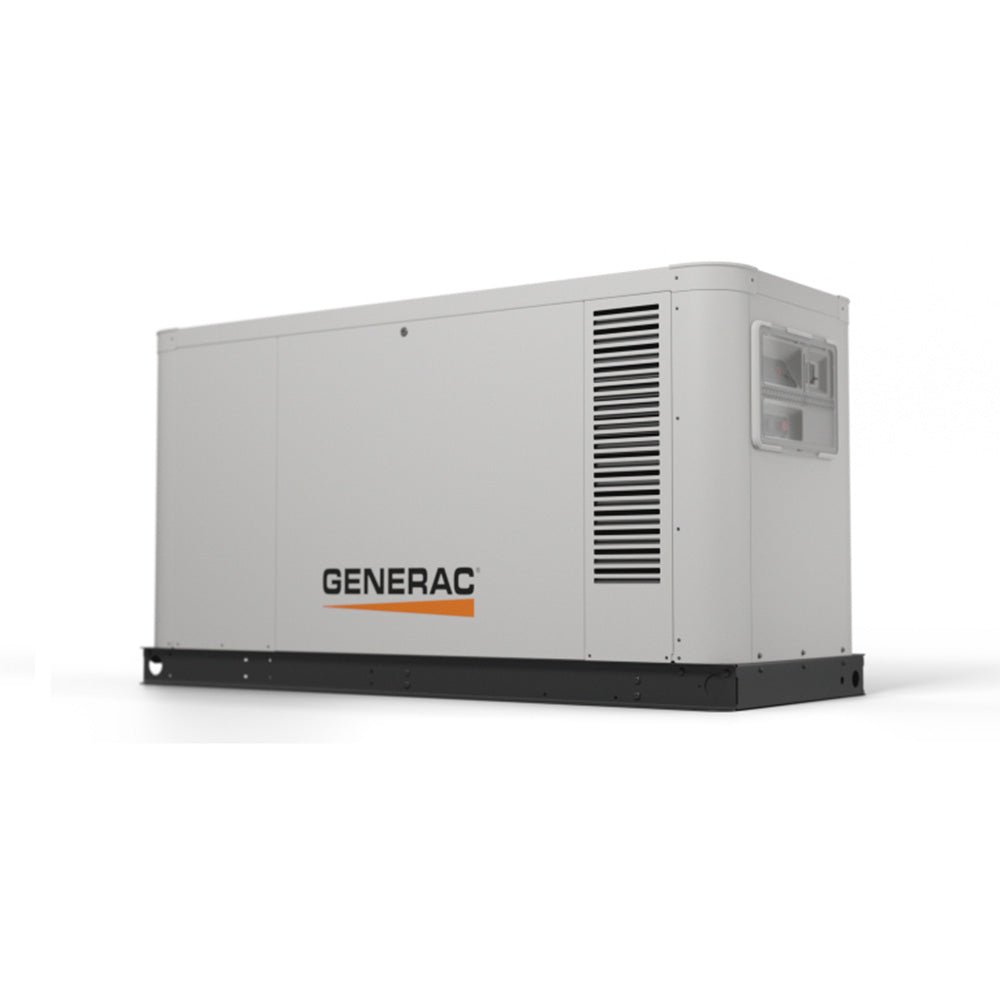
What Size Generator Do I Need? Home Standby Generator Buying Guide
The right size generator is the smallest one that can start and run everything you need at the same time, with some headroom. For a home standby generator that usually means working out whether you want to power essential circuits or the whole house, then adding up the loads. This guide walks through the process step by step.
Browse our home standby generators and automatic transfer switches as you go.
Step 1: Decide what you want to power
- Essentials only: refrigerator and freezer, furnace fan, sump or well pump, some lights, internet, phone charging and perhaps a microwave.
- Essentials plus comfort: add a central air conditioner or heat pump, an electric range or a water heater.
- Whole house: everything runs as normal, including several large appliances at once.
The jump from essentials to whole house is mostly driven by air conditioning, electric heat, electric water heating and electric cooking. Those loads decide the size of your generator far more than lights and electronics do.
Step 2: Add up running and starting watts
Every appliance has running watts (what it uses once it is going) and, if it has a motor or compressor, higher starting watts for a second or two at start-up. The figures below are typical approximations. Always check the label on your own equipment or ask your electrician.
| Appliance | Approx. running watts | Approx. starting watts |
|---|---|---|
| Refrigerator / freezer | 700 | 2,200 |
| Sump pump (1/2 HP) | 1,050 | 2,150 |
| Well pump (1 HP) | 1,000 | 2,500 |
| Furnace blower (1/2 HP) | 875 | 2,350 |
| Central AC (3 ton) | 3,800 | Can exceed 10,000 without a soft starter |
| Microwave | 1,000 | None |
| Electric water heater | 4,000 | None |
| Electric range (one element) | 1,500 | None |
| LED lighting, per room | 50 to 100 | None |
| TV, internet, chargers | 300 | None |
Add the running watts of everything that could run at once, then add the single largest extra starting load (usually the AC or well pump), because large motors rarely start at exactly the same moment.
Step 3: Match the total to a generator size
As a rough guide for homes in the US:
- 10 to 16 kW: essential circuits in most homes, gas heat, no central AC.
- 20 to 26 kW: most of a typical home with 200 amp service, including one central AC unit. The Generac 24 kW with 200 amp transfer switch and the Generac Protector RG025 25 kW sit here.
- 30 to 48 kW: large homes, multiple AC units, electric heat or 400 amp service, and small businesses. See the liquid-cooled Generac XG 32 kW and 45 kW.
- Three-phase commercial sites: Generac three-phase models such as the RG030 and XG 45 kW three-phase, or the 80 kW Protector.
Your electrician will do a proper load calculation before installation, and that calculation should have the final say.
Best home standby generators by home size
Our recommendations from the Generac standby generators we stock. Confirm the final size with your electrician’s load calculation.
- Most homes with 200 amp service: the Generac 24 kW generator with 200 amp transfer switch, or the Generac Protector RG025 25 kW (59 dB rated).
- Large homes and small businesses: the liquid-cooled Generac XG 32 kW or XG 45 kW, for several air conditioners, electric heat or 400 amp service.
- Three phase commercial sites: the Generac Protector RG030 30 kW three phase and our other three phase generators.
- Diesel standby: the Generac RD015 and RD020 diesel standby generators where natural gas is not available.
Step 4: Use load management to buy a smaller generator
You rarely need every large appliance at full power at the same time. Load management modules switch big loads off briefly while another starts, so a smaller generator can cover more of the house. Generac’s Smart Management Module (SMM) and the 100 amp SMM work with Generac smart transfer switches such as the RXSW100A3.
Step 5: Choose your fuel
- Natural gas: an unlimited supply if you have a gas line, with no tank to refill. Most air-cooled generators produce somewhat less power on natural gas than on propane, so check the natural gas rating when you size.
- Propane (LP): stored on site in a tank and stable for years. Tank size sets your run time, so plan for the longest outage you expect. A propane tank monitor lets you track fuel from your phone.
- Diesel: used for commercial and critical standby. See our diesel generators.
Step 6: Pick the transfer switch
A standby generator needs an automatic transfer switch sized to your service: 100, 200 or 400 amps, in the right voltage and phase. A service-rated switch can replace your main disconnect. Read what a transfer switch does for details.
Installation and maintenance
A standby generator must be installed by a licensed electrician and, for the fuel connection, a licensed gas or plumbing contractor, with permits as your town requires. The installer will also follow the manufacturer’s clearance distances from windows, doors and vents.
Budget for the unit, the transfer switch, the pad, the gas line, electrical work and permits. Installation costs vary widely by region and site, so get a local quote.
Plan on yearly service with a maintenance kit (oil, filter, spark plugs), for example the Generac 20-22 kW kit.
Frequently asked questions
What size generator do I need to run a whole house?
Many homes with 200 amp service and one central AC unit land between 20 and 26 kW. Homes with several AC units, electric heat or 400 amp service often need 30 to 48 kW. A load calculation by your electrician is the reliable answer.
Will a 22 or 24 kW generator run my central air?
Usually one central AC unit, yes, especially with a soft starter or load management. Two large units at once may need a bigger generator or load shedding.
How long can a standby generator run?
On natural gas, as long as the gas supply continues, with periodic oil checks during long outages. On propane, it depends on tank size and load.
Is a portable generator enough instead?
For essentials, a large portable generator with a manual transfer switch can work. You have to set it up and refuel it yourself. Compare the options in our inverter vs conventional generator guide.