
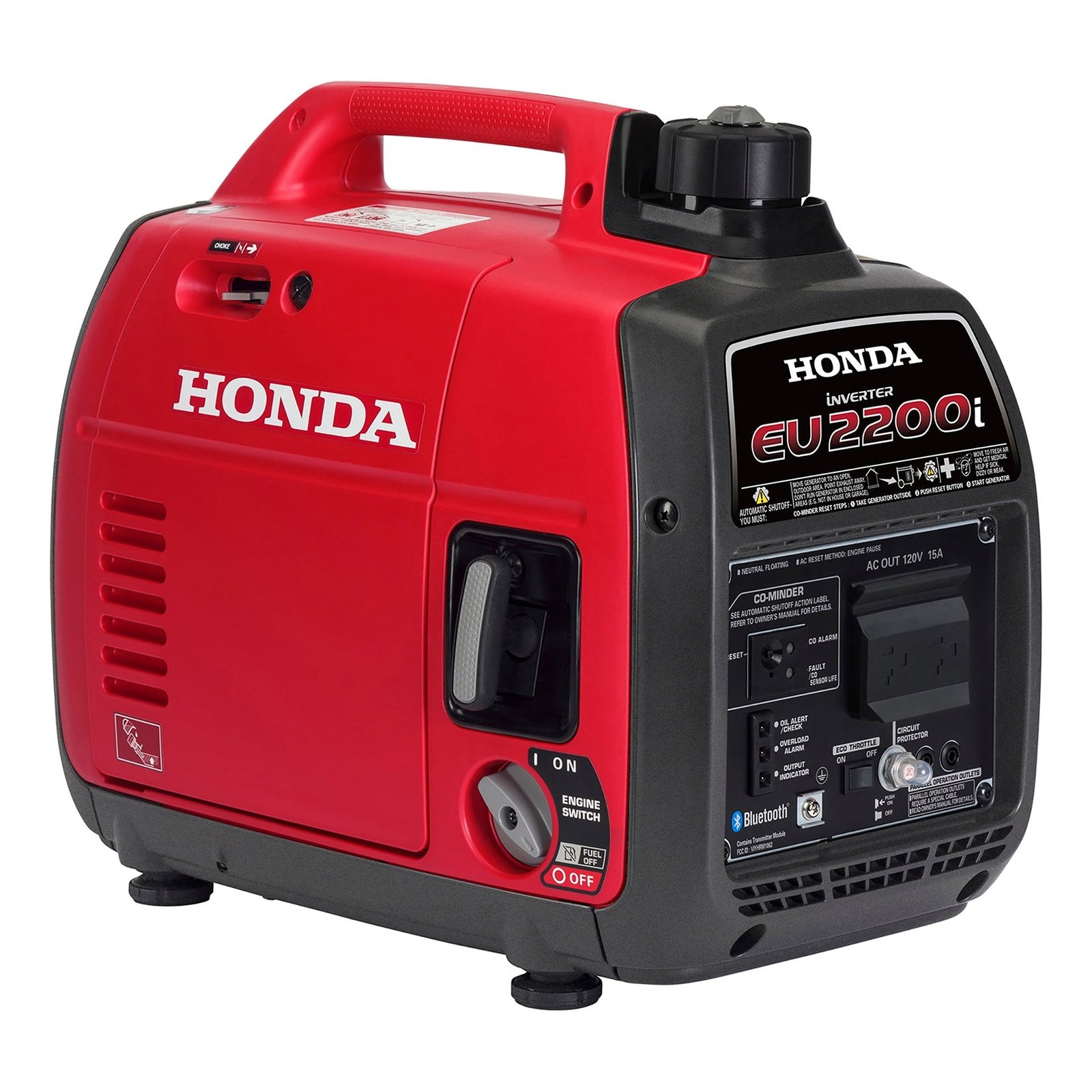
What Is an Inverter Generator? Inverter vs Regular Generator Explained
An inverter generator is a portable generator that turns its engine’s raw AC output into DC and then back into clean, stable AC power. That extra electronic step is what makes inverter generators quieter, more fuel-efficient and safe for sensitive electronics, and it is the main difference between an inverter and a regular (conventional) generator.
This guide explains how each type works, where each one wins, and how to choose. You can browse every model we stock on our inverter generators page.
How a regular generator works
A conventional generator connects the engine directly to an alternator. To produce 60 Hz household power, the engine has to run at a constant speed, typically 3,600 RPM, whether you are powering one light bulb or a full load. That makes conventional generators loud and thirsty at light loads, and the power they produce is “rougher”, with more voltage and frequency variation.
The upside is simple, rugged hardware and a lower price per watt. Large open-frame portable generators such as the Winco, Tsurumi, Multiquip and Honda EB/EM models deliver 5,000 to 12,000+ watts with 240-volt outlets for well pumps, power tools and transfer switches.
How an inverter generator works
An inverter generator produces high-frequency AC, converts it to DC, and then an inverter module rebuilds it as a clean 60 Hz sine wave. Because the output frequency no longer depends on engine speed, the engine can slow down when demand is low. Most inverter generators have an “eco” setting that does exactly that.
The results you notice are:
- Clean power. Low total harmonic distortion makes inverter output safe for laptops, phones, TVs, medical devices and RV control boards.
- Low noise. Honda rates the EU2200i at 48 to 57 dB(A) and the EU1000i at 42 to 50 dB, roughly the level of normal conversation.
- Better fuel economy at partial loads, because the engine is not held at full speed.
- Lighter and more compact enclosed designs.
- Parallel capability. Many models can be linked to a second identical unit to roughly double output.
Inverter vs regular generator at a glance
| Inverter generator | Regular generator | |
|---|---|---|
| Power quality | Clean, stable sine wave | Adequate for tools and appliances, less stable |
| Noise | Quiet, especially at low load | Louder, constant engine speed |
| Fuel use at light load | Low (engine throttles down) | Higher |
| Typical output | 1,000 to 7,000 watts | 3,000 to 15,000+ watts |
| Price per watt | Higher | Lower |
| Best for | Camping, RVs, tailgating, electronics, quiet neighborhoods | Job sites, well pumps, whole-panel backup through a transfer switch |
Which one should you buy?
Choose an inverter generator if
- You camp, RV or tailgate and noise matters to you and your neighbors.
- You need to run computers, TVs or other electronics.
- You want to run a refrigerator, lights and a few circuits during an outage with low fuel use. A Honda EU3000iS or EU3200i covers most essentials, and the EU7000iS adds 240-volt output.
- You want fuel flexibility in a quiet package. The DuroMax XP2300iH and Cummins Onan P4500iDF run on gasoline or propane.
Choose a regular generator if
- You need the most watts for the money, for example for a well pump, central AC or power tools.
- You plan to back up most of your house through a manual transfer switch.
- Noise is less of a concern, as on a job site or a farm.
If you want hands-free whole house backup, neither portable type is ideal. A permanently installed standby generator with an automatic transfer switch is the better fit. See our guide to sizing a home generator.
Best inverter generators by need
These are the inverter generators we recommend from our range, matched to common uses. Noise and output figures come from each manufacturer’s specifications.
- Best for camping and tailgating: the Honda EU2200i. It is light, rated at 48 to 57 dB(A), and can be paralleled with a second unit.
- Best for RVs with air conditioning: the Honda EU3000iS (50 to 57 dB(A)) or the Honda EU3200i (54 to 58 dB(A)), for the extra starting power an RV air conditioner needs.
- Best inverter for home backup: the Honda EU7000iS, with 7,000 watts, 120/240 V output and a 52 to 58 dB(A) rating.
- Best budget dual fuel inverter: the DuroMax XP2300iH, 2,300 watts on gasoline or propane, rated at 52 dB.
- Best mid-size dual fuel inverter: the Cummins Onan P4500iDF, which runs on gasoline or propane.
- Most output from an inverter: the Tomahawk 10,500 watt inverter and the Mi-T-M 7,300 watt inverter, for job sites and larger backup loads.
Sizing tips for inverter generators
- Add up the running watts of everything you will use at once, then check the largest starting (surge) watts. Motors in refrigerators, pumps and air conditioners can briefly need two to three times their running watts.
- Small RV air conditioners often need 3,000 watts or more to start. If you only have a 2,200-watt inverter, plan on running two in parallel or choosing a larger model.
- Leave headroom. Running a generator continuously near 100% of its rating is louder and harder on the engine.
Frequently asked questions
Is an inverter generator better than a regular generator?
For quiet, clean power at camp sites, in RVs and for electronics, yes. For maximum wattage per dollar or heavy 240-volt loads, a conventional generator is usually the better value.
Can an inverter generator power a house?
A large inverter such as the Honda EU7000iS can run essential circuits through a properly installed transfer switch. For the whole house, a standby generator is the right tool.
Can I run two inverter generators together?
Yes, if both are parallel-capable and you use the matching parallel kit or cable. This roughly doubles available output while keeping each unit light enough to carry.
Are inverter generators safe indoors?
No. Every gasoline or propane generator produces carbon monoxide. Run it outdoors, far from windows, doors and vents. Many current models, including Honda’s CO-MINDER units, shut down automatically if CO builds up, but that does not make indoor use safe.